
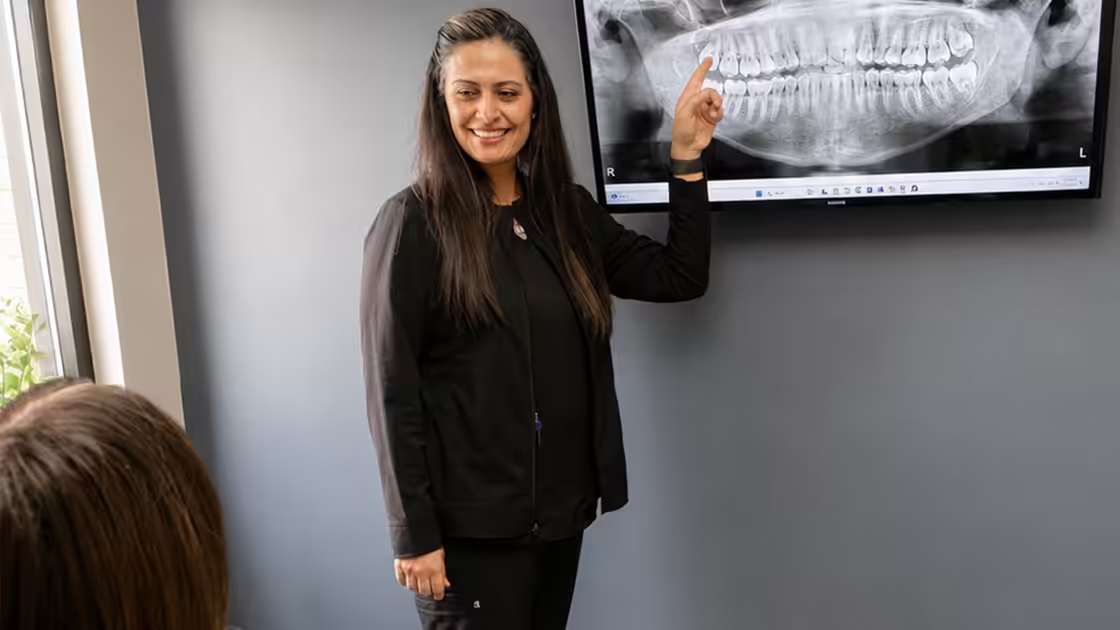
General Guidelines Following All Procedures
Carefully follow all guidelines provided by our office, and, most importantly, practice good oral hygiene. Additional instructions following various types of treatment are listed below. Please click on the topics below for detailed instructions. In the event of an emergency, please call our office. If you are experiencing a serious or life-threatening emergency, please call 911 or visit the nearest emergency room.
Lubbock Office: 806-722-3637
Hobbs Office: 575-408-8840
Video Transcript: Pre-Surgery Preparation Instructions
Video Transcript: Pre-Surgery Preparation Instructions
The following is a full text transcript of the video for accessibility. Total runtime: approximately 2 minutes, 15 seconds.
General Pre-Surgery Guidelines
Surgery coming up? Let's get you ready. Whether you're having local anesthesia or IV sedation, there are a few things everyone needs to know. Your scheduled surgery time is tentative. We'll contact you about 24 hours prior with your arrival time, so make sure we can reach you. Take your regular medications as directed, unless your surgeon told you otherwise. If you are ever unsure about a medication, don't guess—give our surgical team a call. Has anything changed since we saw you? A new illness, a new diagnosis, perhaps a new medication, a hospitalization, or pregnancy? Let us know before surgery. If you're under 18 years old, a parent or legal guardian must accompany you to your appointment. You're always welcome to bring a clean blanket for comfort[cite: 4]. We simply ask that it's free of pet hair and other debris to help us maintain a clean surgical environment[cite: 4].
Local Anesthesia & Oral Sedation Requirements
If you've selected to stay awake for your procedure, you can eat and drink as normal and are not required to have a driver unless you want one[cite: 4]. If your oral surgeon prescribed a medication such as Valium or any other meds to help you relax before your procedures, you must have a responsible adult drive you to and from your appointment[cite: 4].
IV Sedation & General Anesthesia Instructions
If you choose IV sedation or general anesthesia, we have a few additional instructions[cite: 4]. Do not eat or drink anything after midnight the night before your surgery[cite: 4]. Food or liquid in your stomach during anesthesia can be dangerous and may cause your procedure to be rescheduled[cite: 4]. You must have a responsible adult drive you to and from your appointment[cite: 4]. Your driver is required to remain in our office during your entire procedure[cite: 4].
Surgery Fit Check & Specific Medical Guidelines
Now for your Surgery Fit Check: no long sleeves, no contacts, hair pulled back, no makeup, no nail polish, and no jewelry[cite: 4]. If you take medication for high blood pressure or long-term oral steroids, take your medication two hours prior to your appointment with only a small sip of water, unless directed otherwise by your surgeon[cite: 4]. If you use a daily maintenance inhaler, you may use it the morning of surgery as usual[cite: 4]. If you have a rescue inhaler, such as an albuterol inhaler, please bring it with you to your appointment[cite: 4]. If you have diabetes, please check your blood sugar about one hour before your procedure[cite: 4].
Conclusion
Okay, you're ready for surgery[cite: 4]. You're in good hands[cite: 4]. We'll see you soon[cite: 4].
End of transcript.
Video Transcript: Post-Surgery Recovery & Care Instructions
Video Transcript: Post-Surgery Recovery & Care Instructions
The following is a full text transcript of the video for accessibility. Total runtime: approximately 3 minutes, 55 seconds.
Immediate Post-Op & First 24 Hours
You did it! Now let's make recovery easy. Here's what you need to know: today, you're off duty. If you had IV sedation, congratulations—your only job for the next 24 hours is recovering. For the first 24 hours, no driving, no work or school, no exercise, no operating machinery, and no making legal decisions. Stay with a responsible adult.
Gauze & Bleeding Management
Gauze 101: You're going to fold the gauze in half, and in half again, and then again until it is small enough to fit on the surgical site. Apply pressure for 30 to 60 minutes until the majority of the bleeding has stopped. Bleeding stopped? If so, leave it out. Still bleeding? Apply fresh gauze and repeat the process as necessary. Applying firm pressure is the trick. If you're having persistent bleeding, a damp black tea bag can sometimes help promote clotting.
Managing Swelling & Symptoms
Welcome to the puffy phase! Swelling is a normal part of the healing process and usually peaks around days three to four after surgery. It can take up to 10 days for the swelling to completely resolve. For the first 24 to 48 hours, apply an ice pack to the outside of your face: 20 minutes on, 20 minutes off, and repeat as needed. Keeping your head elevated while resting can also help reduce swelling. Call us if you have a fever, foul taste or odor, concerning drainage, or increasing or unusual symptoms. If something doesn't feel right, call us. We'd rather you ask.
Pain Control & Prescriptions
For pain control, stay ahead of your discomfort and take medications as directed. Taking your medications with food can help prevent nausea. If you've been prescribed pain medication, take it exactly as directed. You may also alternate ibuprofen and Tylenol to help with both pain and inflammation. If you're prescribed antibiotics, be sure to take the entire course, even if you're feeling better.
Oral Hygiene Routine
Keeping your mouth clean is one of the best ways to prevent infection. For the first two to five days, avoid vigorous rinsing, forceful spitting, and brushing surgical sites. You may gently rinse with either a prescribed mouthwash or warm salt water. Do not use a water flosser or Waterpik for at least one week after your procedure. If you were sent home with an irrigation syringe, begin using it seven days after your procedure on lower extraction sites.
Dietary & Lifestyle Guidelines
What's on today's menu? On the day of surgery, stick with soft foods like pudding, yogurt, applesauce, soup, mashed potatoes, or Jell-O. For the next week, avoid hard, crunchy, and chewy foods, including chewing ice. Be careful with hot foods and drinks while you're still numb. For the first four days, avoid drinking through a straw and avoid any carbonated beverages. If you are taking prescription medications, do not drink alcohol. We also recommend avoiding smoking during the healing process, as it can delay healing and increase the risk of complications.
Sutures, Biopsies, Implants & Next Steps
Depending on the type of sutures used, they'll either dissolve on their own or we'll remove them at your follow-up appointment. If a biopsy was performed, the tissue will be sent to a pathologist for evaluation. Results typically take one to two weeks, and our office will contact you as soon as we receive them. If you've had a bone graft or a dental implant placed, you'll have follow-up visits over the coming months so we can monitor your healing. Once your implant is ready, we'll notify both you and your general dentist so the final restoration can be completed.
Closing
Thank you for trusting us with your care. Now go home, get comfortable, and take it easy—you've earned it! Recovery isn't exactly the same for everyone. Our care doesn't end when surgery does. If you're worried about something, call us. That's what we're here for.
End of transcript.